

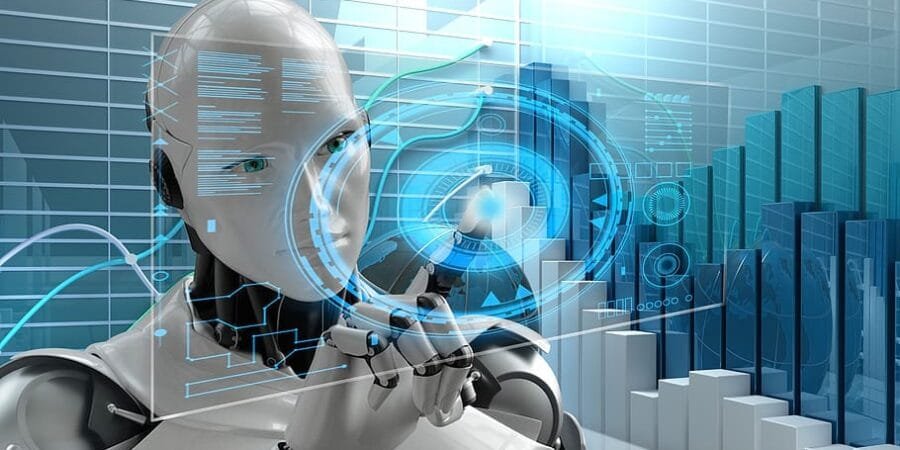
Artificial intelligence (AI) and machine learning (ML) have become indispensable in modern technology, revolutionizing industries and everyday life. From healthcare and finance to transportation and entertainment, AI-driven innovations are enhancing efficiency, automating processes, and improving decision-making. This article explores the crucial role AI and ML play in shaping the future of technology.
1. AI and Machine Learning in Healthcare
AI-powered solutions are transforming healthcare by improving diagnostics, treatment plans, and patient care. Machine learning algorithms analyze medical data to detect diseases earlier and with greater accuracy.
AI-driven chatbots and virtual health assistants help patients manage their health, while robotic surgeries enhance precision in complex medical procedures. Personalized medicine, powered by AI, tailors treatments based on genetic information, increasing success rates and reducing side effects.
2. AI in Finance and Banking
The finance industry relies on AI and ML for fraud detection, risk assessment, and automated trading. Machine learning algorithms analyze transaction patterns to identify suspicious activities and prevent financial fraud.
AI-driven chatbots assist customers with banking queries, while robo-advisors provide personalized investment recommendations. Predictive analytics in finance helps businesses make data-driven decisions, optimizing financial strategies and improving overall efficiency.
3. Smart Transportation and Autonomous Vehicles
AI is driving innovations in transportation, making travel safer and more efficient. Autonomous vehicles use AI-powered sensors and machine learning models to navigate roads, reducing human error and improving traffic management.
Smart traffic management systems leverage AI to optimize traffic flow, reducing congestion and emissions. Ride-sharing services use AI algorithms to match passengers with drivers efficiently, minimizing wait times and maximizing convenience.
4. AI in Business and Customer Experience
AI enhances business operations by automating repetitive tasks and improving customer interactions. AI-powered chatbots provide instant customer support, while sentiment analysis helps businesses understand consumer behavior.
Machine learning-driven recommendation engines personalize shopping experiences, increasing customer engagement and sales. AI-powered analytics tools help businesses optimize marketing strategies and streamline operations for better productivity.
5. AI in Education and E-Learning
Education is transforming with AI-powered learning platforms that offer personalized experiences. Adaptive learning systems adjust content based on a student’s progress, enhancing comprehension and retention.
AI-driven language processing tools assist students in learning new languages, while virtual tutors provide instant feedback. AI-powered grading systems reduce the burden on educators, allowing them to focus on interactive teaching methods.
6. AI for Cybersecurity and Data Protection
With the rise of cyber threats, AI plays a critical role in cybersecurity by detecting and preventing attacks in real-time. Machine learning algorithms identify anomalies in network traffic, helping organizations mitigate potential breaches.
AI-powered authentication systems use biometrics, such as facial recognition and fingerprint scanning, to enhance security. AI-driven encryption methods protect sensitive data, ensuring privacy and compliance with regulations.
Conclusion
AI and machine learning are redefining modern technology, driving innovation across industries. From healthcare and finance to transportation and entertainment, AI enhances efficiency, improves decision-making, and automates processes.
As AI continues to advance, its integration into everyday life will only deepen. By embracing AI responsibly and addressing ethical concerns, society can harness its full potential to create a smarter, more efficient, and more connected world.


